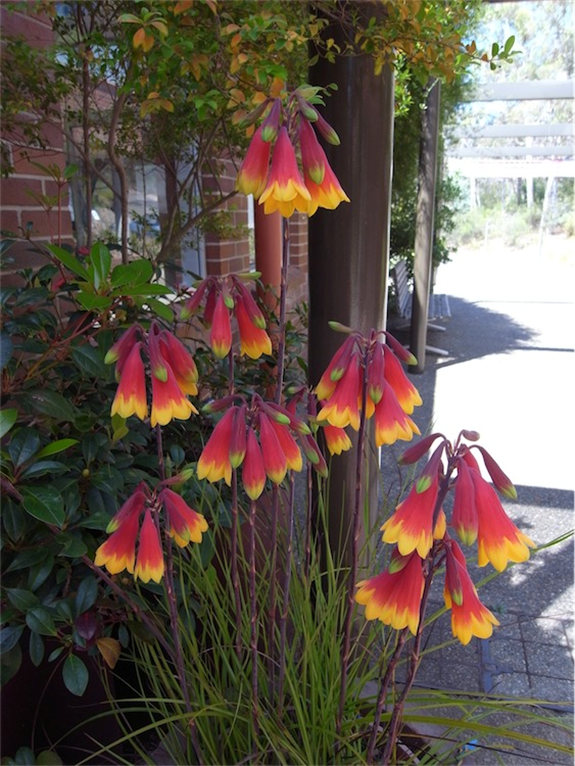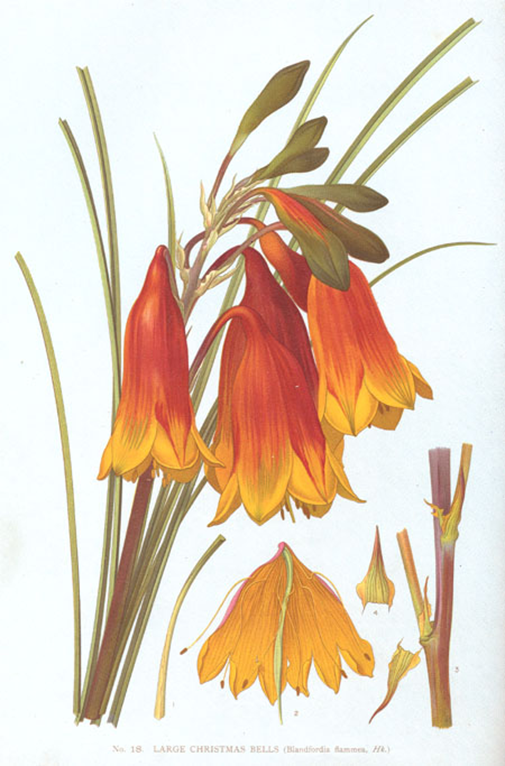

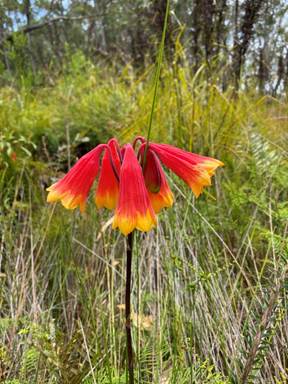
Blandfordia Grandiflora
We are indebted to staff from the City of Gold Coast Council who researched and presented this information to our Club in June 2025. Many thanks to Senior Parks Asset Leader Pete Thornton & Chantelle Withers Senior Nursery Worker and Council for their efforts to re-establish this plant to the local habitat.
Conservation status
- IUCN Red List (global): Not evaluated (no assessment has been made) .
- EPBC Act (Australia): Not listed (the species does not appear on the Commonwealth threatened species lists).
- Queensland: Listed as Endangered under the Nature Conservation Act 1992 . (It was previously considered Rare, but currently Endangered in QLD.)
- New South Wales: No formal state threatened status. It is not listed under NSW conservation legislation.
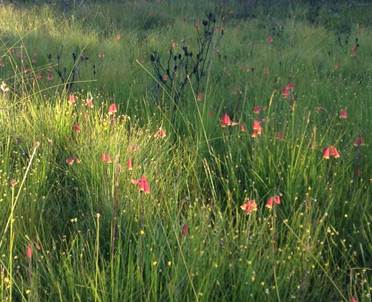
Habitat and distribution
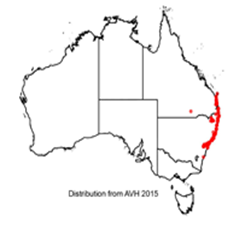
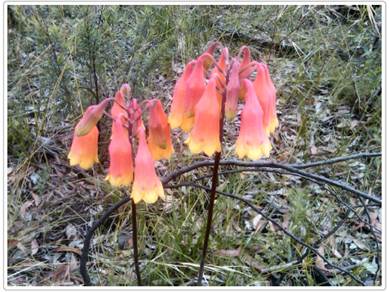
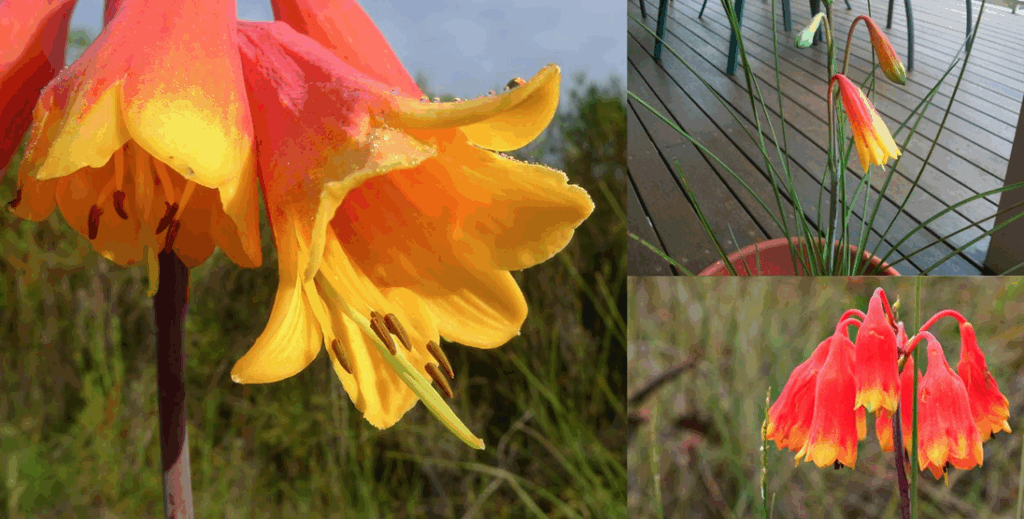
Blandfordia grandiflora is endemic to eastern Australia, occurring on coastal sandy soils from northern New South Wales into south‐eastern Queensland. Its range extends roughly from the Hawkesbury River region (NSW) north to Fraser Island (Qld), and inland to the Glen Innes tablelands . The plant grows in damp, sandy heathland and wallum (acidic coastal wetland) habitats – typically low-nutrient, swampy heaths on coastal plains and islands . In these wet heath communities it is a tufted perennial with grass-like leaves; flowering usually occurs in spring–summer when its pendent red-andyellow bell flowers appear above the foliage.
Major threats
- Habitat loss and fragmentation: Coastal development, agriculture, forestry and land clearing have reduced and fragmented the heath and swampy habitats where Christmas bells grow. Altered hydrology (drainage) and coastal suburbanization have degraded many sites.
- Unsustainable harvesting: B. grandiflora has been heavily collected for cut flowers. A recent management report notes that Christmas bells are “among the most popular east coast wildflowers,” and warns that intense bush-picking and over-harvesting have led to local population collapses . In some areas, repeated burning or slashing to create new Blandfordia habitat has also disturbed other species and ecosystem balance .
- Invasive plants: Aggressive weeds (e.g. exotic grasses, Lantana, vines) invade open heaths, and Christmas bells are poor competitors. As one horticultural guide warns, Blandfordia “does notcompete well with weeds; if weeds take over the plants may not recover” . Weed encroachment is a serious threat in disturbed sites.
- Altered fire regimes: Blandfordia is fire-adapted (it resprouts and often flowers profusely after fire), so changes in the timing or frequency of fire can affect regeneration. Both fire suppression and too-frequent burning can harm populations.
- Disease and pathogens: The species is susceptible to soil-borne fungi (e.g. Phytophthora, Pythium) in waterlogged conditions . Poorly drained or excessively wet sites may encourage
root rot.
- Climate change: Predicted shifts in rainfall and temperature may further stress coastal swamp habitats, though specific impacts on B. grandiflora have not been studied.
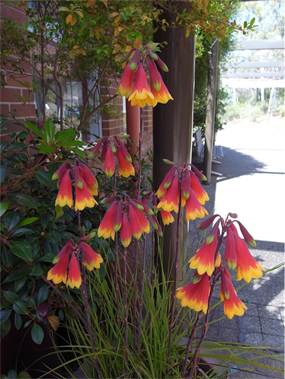
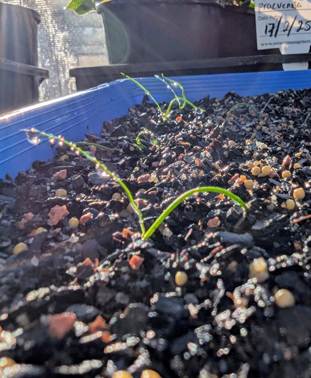
Conservation and recovery
- Legal protection: In Queensland, B. grandiflora is protected as an Endangered flora under the Nature Conservation Act. This affords regulation of land use where it occurs. There is no federal listing (EPBC), but the plant is covered by general cut-flower trade regulations. In New South Wales, wild harvest and export of Christmas bells require permits .
- Cut-flower industry management: Australia’s “Cut-flower Sustainable Management Plan” (2023–27) includes Christmas bells. It restricts wild harvesting to licensed growers and encourages cultivated production. For example, only approved growers may harvest in situ, and a tagging system will track wild-harvested stems . These measures aim to prevent overcollection and support conservation of wild populations.
- Habitat protection: B. grandiflora occurs in several protected areas (e.g. Moreton Bay Islands National Park, other coastal reserves). Maintaining intact wallum and heath habitat in these parks is a key strategy. Land management agencies also control invasive weeds and applycareful fire regimes to sustain these ecosystems.
- Restoration and translocation: Experimental translocations have had some success. In a subtropical coastal heath restoration, turves containing B. grandiflora were transplanted to a new site. After prescribed burns, Blandfordia plants resprouted and flowered normally within ~1.5 years. Such efforts (and ongoing monitoring) are part of restoring populations in fragmented landscapes.
- No species-specific recovery plan: There is currently no standalone national recovery plan for Blandfordia grandiflora, but it may benefit from broader restoration initiatives (e.g. wallum heath recovery programs). Government and community groups (e.g. “Save the Wallum”volunteer projects) work on protecting coastal wet heath ecosystems that support Christmasbells.
Ecological and cultural significance
- Ecological role: Christmas bells are a characteristic component of coastal heathland flora. The nodding, tubular flowers produce nectar and are visited by nectar-feeding wildlife. Studies and field notes report that honeyeater birds frequently feed on B. grandiflora blooms . (In some areas, introduced honeybees also pollinate the flowers.) As a perennial herb adapted to wet, acidic sands, Blandfordia contributes to the biodiversity of wallum ecosystems and often co- occurs with other endemic shrubs and lilies . Its life history (e.g. fire-stimulated flowering) illustrates the link between this plant and the natural fire regime of coastal Australia .
- Cultural value: The large Christmas bell is well-known in Australia. Its striking red-and-yellow blossoms in summer coincide with the Christmas season, giving it national symbol status.
Notably, B. grandiflora was featured on Australian postage stamps (issued 1960 and 1967) as a celebrated native wildflower . It is prized in horticulture and the cut-flower trade, and historically was cultivated even in Europe in the 19th century. Its common name “Christmas bells” reflects its festive significance. In New South Wales and Queensland gardens, it is sometimes grown for its ornamental flowers (though it is slow-growing and best suited to sandy, well-drained soils).
- At about the same time as Australia produced its first postage stamp in 1913, the cigarette companies were capitalising on the collecting urge and strengthening customer loyalty with series of cards on a wide range of topics.
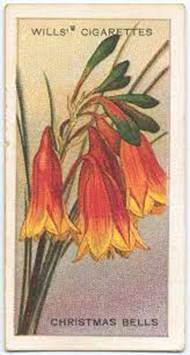
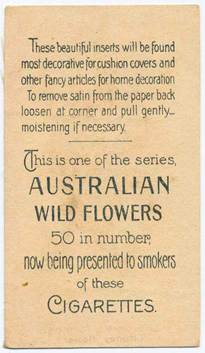
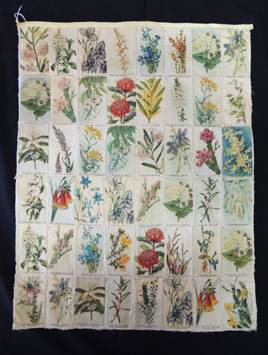
- Twin Towns & District Garden Club emblem forms part of a museum piece
- ‘Silk’ cards stitched together to form a cushion cover
- Cushion cover c. 1918. Courtesy of Hurstville City Library Museum & Gallery Collections
City of Gold Coast (CoGC) & Twin Towns & District Garden Club initiatives
- CoGC Nursery intends to continue purchasing, propagating, offering Blandfordia plants and educating residents about this little gem and its value as a potted or garden specimen at Free Plant Giveaway events
- CoGC Open Space Services team are encouraged to include Blandfordia plants in suitable projects as part of the garden bed renewal program
- CoGC Natural Areas Conservation team have scoped to include the endangered plants in a Community Revegetation Project planned for Boyd Park Tugun (& future jobs)
- CoGC Regional Botanic Gardens curator jumped at the opportunity to plant some in the Wallum Heath Garden after being destroyed in the recent cyclone.
- Several Twin Towns & District Garden Club members have received plants from both the free tree away day and as raffle prizes (donated by CoGC) for use in the private garden setting
- Together both CoGC and Twin Towns & District Garden Club members continue to educate the public, friends and family, about Blandfordia and its value as an endangered endemic plant of our region for use in revegetation projects and as a potted or garden specimen.
Sources: Authoritative databases and publications were used, including the Queensland Government species profile , Australian conservation planning documents , botanical guides , and government resources , as well as peer-reviewed research. Each factual statement above is cited to a reliable source.
Search
https://www.worldfloraonline.org/search;jsessionid=788E5F204F960C41E0D7C39AB2581295?
query=artemisia+princeps&view=&limit=5&start=0&sort=&facet=taxon. family_ss%3aBlandfordiaceae&facet=taxon. distribution_TDWG_0_ss%3aAUSTRALASIA&
Species profile—Blandfordia grandiflora (christmas bells) | Environment, land and water |
Queensland Government
https://apps.des.qld.gov.au/species-search/details/?id=17868
Blandfordia grandiflora
https://www.cpbr.gov.au/stamps/stamp.354.html
Blandfordia grandiflora – Australian Native Plants Society (Australia)
https://anpsa.org.au/plant_profiles/blandfordia-grandiflora
COASTAL AND SUB-COASTAL WET HEATH SWAMPS
Draft Cut-flower Sustainable Management Plan 2023–2027
Growing Blandfordia (Christmas Bells) commercially
http://www.dpi.nsw.gov.au/__data/assets/pdf_file/0008/134837/blandfordia.pdf
APC 28(1) June – August 2019
https://www.anpc.asn.au/wp-content/uploads/2019/09/APC_28-1_Jun-Aug19_Shapcott-Heath.pdf